
SDG Summer Course on Halal Science and Innovation
for Sustainable Global Food Systems
at Universitas Diponegoro (UNDIP), Semarang
18th May, 20th –21st May, 1st – 5th June 2026
Indonesia is among the majority-Muslim countries, and its citizens form the largest Muslim communities in Southeast Asia. As Muslims, they are required to consume HALALAN/TOYYIBAN products, especially foods, because food is a very basic need of human beings. Practicing HALALAN/TOYYIBAN by Islamic regulation maintains their obedience to the directive of the religion.
By definition, HALALAN means the sources are coming from clean sources (especially animal-originated sources), while TOYYIBAN means ensuring that the consumption won’t affect their well-being.
Tourism is a major contribution to Indonesia’s economy. Indonesians promote their local products (called Oleh-Oleh Khas, especially foods) as items for tourist to bring back to their countries. These products retain their uniqueness by their respective region. For example, Bandeng Presto (milkfish cooked in a special method until its bone becomes soft and consumable) is among Oleh-Oleh Khas from Semarang. By applying the HALAL certification, tourists, especially from Muslim countries, will benefit from it.
New halal logo approved by the Government of Indonesia (2023)
Other than food, HALALAN/TOYYIBAN is also required in other fields like pharmaceuticals, cosmetics, and other lifestyles. Thus, ongoing research regarding the process and certification approved/recognized by the government is a continuous effort that should be welcomed.
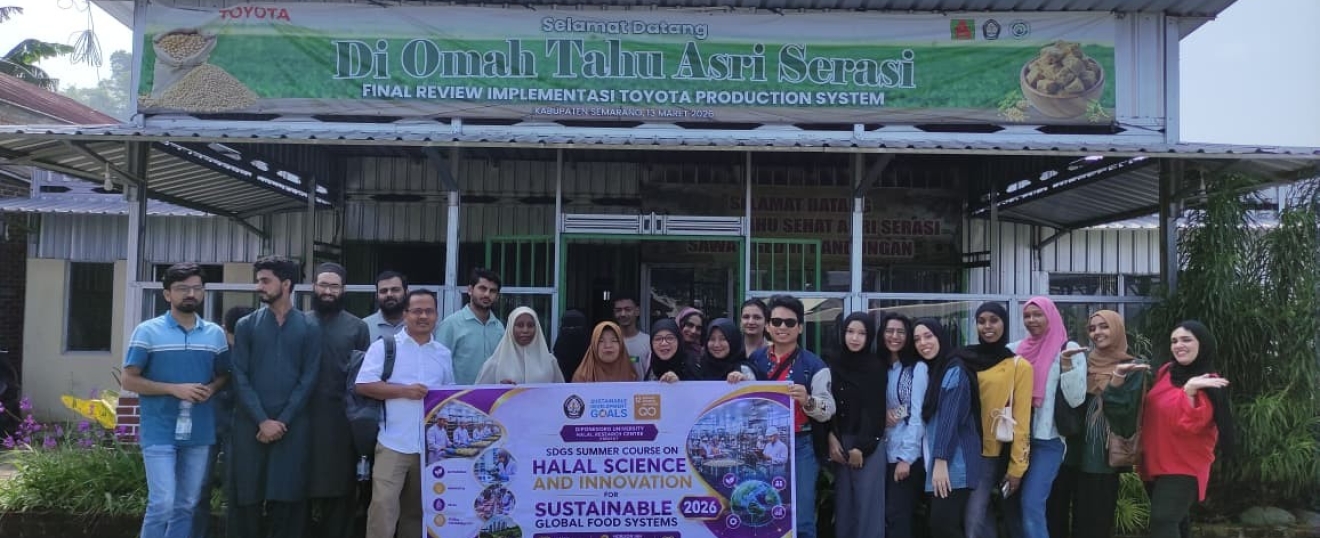
Halal Research Institute of Universitas Diponegoro (UNDIP) has organized this Summer Course and invites participants from other universities to join this program to gain knowledge in HALAL processing scientifically. This program is also in line with a few SDGs to ensure sustainability for future generations.
This program comprises online and physical sessions.