Blog

Where Knowledge Meets Leadership.

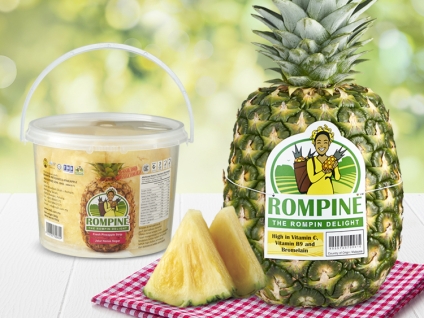
Q & A with Mr. Mohd Shafiq Fayyadh Bin Mohd Sheth, Chief Executive Officer, Rompin Integrated Pineapple Industries Sdn Bhd (ROMPINE)

Q & A with Mr. Mohd Shafiq Fayyadh Bin Mohd Sheth, Chief Executive Officer, Rompin Integrated Pineapple Industries Sdn Bhd (ROMPINE)

By: Dr Noraina Mazuin binti Sapuan, Dr Mohamad Reeduan Mustapha, Dr Khairunnisa Abdul Aziz, Dr Norwazli Abdul Wahab

Q1: ROMPINE was founded with a vision to lead the Malaysian pineapple industry. What is the company's core product, and how does ROMPINE’s product quality allow you to compete against larger regional players like Thailand and the Philippines?

Our core business is the cultivation and export of the premium MD2 pineapple variety. The MD2 pineapple is highly sought after because it offers a sweet taste combined with low acidity levels and aromatic qualities. While competitors like Thailand and the Philippines dominate the global market based on economies of scale and processed goods, ROMPINE competes by leveraging its superior product quality, certifications, and sustainable practices. We focus on producing fresh, uniformly sized, and ripe pineapples to meet the market demand.


Q2: ROMPINE has successfully expanded its business beyond fresh pineapples. What role does product diversification play in your overall strategy, and how does it contribute to market resilience?

Product diversification is crucial for our resilience. One way we expanded the business was through the development of processed goods, such as dried pineapple and jackfruit snacks. We also produce fresh-cut pineapple products, pure juices, and other processed items. This expansion serves multiple purposes: it increases our customer base and protects us against the periodic shortage of fresh produce. Furthermore, our processing facilities help in waste reduction by converting fruits that do not qualify for export into usable products. By tapping into the processed food segment, we gain longer shelf lives and broader distribution channels, which protects our interests against seasonal market fluctuations and unpredictable market conditions.


Q3: ROMPINE was appointed by the East Coast Economic Region Development Council (ECERDC) as an anchor company. How does ROMPINE balance its financial goals with its dedication to improving the socioeconomic status of the local community?

Our commitment involves pursuing dual goals: financial success and dedication to improving the economic status of the indigenous Jakun community through employment opportunities and regional economic growth. The Rompin Integrated Pineapple Project (RIPP) has successfully provided jobs for over 300 individuals, including 150 local and indigenous workers. This has been more than just employment; it is a gateway to stability and improved livelihoods. We have specifically improved the living conditions for 88 families in the Jakun indigenous community of Kg Tanam and generated RM1.6 million in dividends for Kooperasi Orang Asli Kg. Tanam during our seven years of operation.


Q4: Entering major international markets like China, Japan, and South Korea requires adherence to rigorous standards. What is ROMPINE’s global footprint, and what specific requirements did you have to fulfill to secure these lucrative export opportunities?

ROMPINE has successfully expanded its export network for fresh MD2 pineapples to over 21 countries across Asia, the Middle East, Europe, and beyond. Our key markets include Japan, South Korea, and China. Our first major international milestone was obtaining permits to export to the Chinese market. To enter and maintain presence in these premium agricultural markets, we must adhere to strict health and safety standards. Targeted export markets like Singapore, Japan, and Korea demand MD2 pineapples that show specific attributes, including consistent sweetness combined with vibrant color and a blemish-free appearance.


Q5: After facing significant financial challenges in 2022 and 2023, what is your projected outlook for ROMPINE, and what major strategic investment is necessary to secure the company’s future growth and competitive edge?

The company faced a turbulent period with a sharp decline in Net Sales Revenue in 2022, and despite revenue increasing in 2023 to RM 17.7 million, we reported a net loss of RM 31.9 million. Nevertheless, I expected a more prosperous year from 2024 onwards, with a projected revenue increment of at least 20% compared to the previous year. To achieve this growth and overcome issues like rising fertilizer, energy, and labor costs, the company must make strategic plans to expand its automation systems and process optimization programs. This requires substantial capital investment, which has led the company to search for new investors to strengthen our financial base and make new business expansion possible.

* Want to explore the full story of ROMPINE? Get your copy now from UMPSA Publisher Bookstore or conveniently on Shopee:  https://my.shp.ee/uWRDUxK

 

My Journey with Master of Project Management

My Journey with Master of Project Management

 By: Ts. Auzaie Aiman Zaiyap bin Zulhakimi Yap

Master Project Management Alumnus 2025

The Graduate Engineering and Technological Business School (GET-BS) program from the Faculty of Industrial Management (FIM), UMPSA makes me more precise during the project management work. From starting higher studies, Diploma and Bachelor's Degree, my scope of work is more to Maritime Technology and Engineering, until now working as a Technical Executive at one of the shipyards in Pahang. During my master's degree studies, my thesis on “Exploring SMART Refit Methods in Ship Repair: Reducing Delays and Enhancing Performance” is good for researching topics related to my field, and with the addition of project management knowledge, it will have a greater impact on my career. 

This program makes me more detailed in every scope, work, and term during my work from time to time. Learning about risk management, cost management and control, strategic management, and others gives a more solid foundation in every project that I am handling with my project team, and I am willing to share what I get from my master's studies with my project team. Each assessment from before, during, and after the project gives me more valuable points and info to boost my credibility and management skills.

The project management modules from my master’s program built upon this technical knowledge, equipping me with the tools to effectively manage a project from conception to completion. I learned about risk identification, qualitative and quantitative risk analysis, and response planning. This is where the synergy of the GET-BS program became most apparent. I was able to apply the theoretical frameworks of project management to the specific engineering context of maritime technology and engineering.

The thesis itself is a direct result of this integrated learning. A qualitative risk analysis technique allowed me to have a discussion with experts from the same industry via an interview method. This method enabled me to analyze the causal relationships between different risk factors, helping to identify the root causes of potential project delays and finding a solution to overcome the problem statement.

Without the comprehensive and integrated education provided by GET-BS, it would have been impossible to tackle such a specialized and interdisciplinary topic. The program didn’t just teach me a set of skills; it taught me how to synthesize knowledge from different fields to solve real-world problems. This experience has not only enriched my academic journey but has also prepared me for a better career in a field where technical expertise and project management skills are equally valued.


The Call from an Unknown Number

The Call from an Unknown Number

By: Dato Dr Kamarul A Muhamed, Aerodyne’s Group CEO and Founder

Sometime in mid-January 2024, I received a rather strange call from an unknown number.

I almost ignored it.

It turned out to be the personal assistant to the late Tun Daim Zainuddin, inviting me to meet him at his residence.

As a businessman, I have always tried to remain apolitical. My position has been simple: respect the government of the day, stay in the middle lane, and avoid unnecessary proximity to politics.

But this invitation was different.

Tun Daim meant different things to different people, shaped by his long years in business, government and public life. But my meeting with him was private, and the conversation was about business, not politics.

I went because he had asked to hear the story of my business.

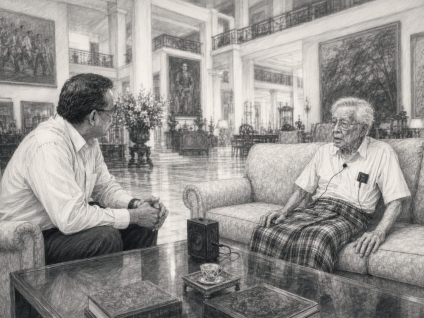
When I arrived, I was struck by the scale of his residence.

A massive open space. Open walls. Multi-levels. Large paintings. A quiet stillness that made every footstep feel heavier than usual.

Tun Daim was already very frail then.

He was seated on the sofa, wearing kain pelikat, speaking through a small microphone tucked in his shirt pocket. A small speaker was placed on the coffee table between us.

I still remember that small speaker.

In that large room, it carried his voice.

Soft, measured, but still clear.

I was a little nervous. I did not know him personally, and I was not sure what to expect.

Then he asked me to tell him about my business.

So I did.

I took him through the journey — the early struggles, the sacrifices, the difficult decisions, and the move to expand globally when many thought it was too early, too risky, or too ambitious for a Malaysian company.

He listened closely.

Frail in body, yes. But still sharp in mind.

He asked question after question. Precise, direct, and probing. It was clear he was not merely listening to a story. He was testing the thinking behind the journey.

Then he offered his advice.

Keep the business focused.

Avoid distractions.

Protect the company.

Build on substance.

He also shared other business advice. Some simple, some direct, all shaped by someone who had seen business and public life from very close range.

I left the meeting with mixed emotions.

There was pride, because my business journey had travelled far enough to be noticed.

But there was also humility.

Because in that quiet room, across that coffee table, I was reminded that every entrepreneur must learn not only how to build, but also how to survive.

Looking back now, the meeting feels even more meaningful.

At the time, I thought it was just a conversation.

Only later do some moments reveal their weight.

Sometimes, a short meeting stays with you not because of what was said alone, but because of the silence around it, the frailty of the moment, and the quiet lessons it leaves behind.

Semoga Allah SWT mengampuni dosa-dosanya, merahmati rohnya, dan menempatkannya dalam kalangan orang-orang yang beriman.

My International Mobility Experience at UNDIP 🇮🇩

My International Mobility Experience at UNDIP 🇮🇩

SDG Summer Course on Halal Science and Innovation for Sustainable Global Food Systems at Universitas Diponegoro (UNDIP), Semarang
18th May, 20th –21st May | 1st – 5th June 2026

Indonesia is among the majority-Muslim countries, and its citizens form the largest Muslim communities in Southeast Asia. As Muslims, they are required to consume HALALAN/TOYYIBAN products, especially foods, because food is a very basic need of human beings. Practicing HALALAN/TOYYIBAN by Islamic regulation maintains their obedience to the directive of the religion. 


By definition, HALALAN means the sources are coming from clean sources (especially animal-originated sources), while TOYYIBAN means ensuring that the consumption won’t affect their well-being.
Tourism is a major contribution to Indonesia’s economy. Indonesians promote their local products (called Oleh-Oleh Khas, especially foods) as items for tourist to bring back to their countries. These products retain their uniqueness by their respective region. For example, Bandeng Presto (milkfish cooked in a special method until its bone becomes soft and consumable) is among Oleh-Oleh Khas from Semarang. By applying the HALAL certification, tourists, especially from Muslim countries, will benefit from it.


New halal logo approved by the Government of Indonesia (2023)
Other than food, HALALAN/TOYYIBAN is also required in other fields like pharmaceuticals, cosmetics, and other lifestyles. Thus, ongoing research regarding the process and certification approved/recognized by the government is a continuous effort that should be welcomed.  


Halal Research Institute of Universitas Diponegoro (UNDIP) has organized this Summer Course and invites participants from other universities to join this program to gain knowledge in HALAL processing scientifically. This program is also in line with a few SDGs to ensure sustainability for future generations.
This program comprises online and physical sessions. 
For online sessions, it consists of lecture programs which have been divided into 3 days of lectures: 
Day Presenter Topics/Key Points
1 (18th May) Prof Diana Nur Afifah The Role Of Biotechnology
In Halal Food Production
 Prof Irwandi Jaswir Global Halal Industry: Opportunities and Challenges
Different Islamic countries have different methods of Halal Certification, which affects the import/export procedure.
2 (20th May) Prof Widayat Critical and Non-critical Points of Materials Used for the Halal Product Process
 Prof Satomi Ohgata Halal Practices in Japan: Between Strict Halal Standards and Lived Practice in Minority Settings
3 (21st May) Prof M Ajmal Shah Green Extraction Technologies in Halal Phytochemicals (SDG3, SDG9, SDG12, SDG17)


All participants were also required to submit their assignments on selected topics to ensure a deep understanding of the lectures.
For physical sessions, it comprises visits to selected food manufacturing premises and is explained chronologically as follows:
Day 1 (1st June) – Arrival Day. As I travelled from Malaysia to attend this event, I was picked up at Semarang Airport by UNDIP representative (Mr Aldo Siregar and Miss Syaidah Nabilah), treated with Nasi Padang for lunch, and later checked in at Horizon Antawirya Hotel, near UNDIP campus. Participants also arrived from nearby universities like Universitas Negeri Semarang (UNES) and Universitas Negeri Malang (UM) with different nationalities, mostly from Pakistan, Egypt, and India.


Day 2 (2nd June)
Visit 1 – Bandeng Juwana Elrina


Visit 2 – Tahu Bakso Baginda


Day 3 (3rd June)
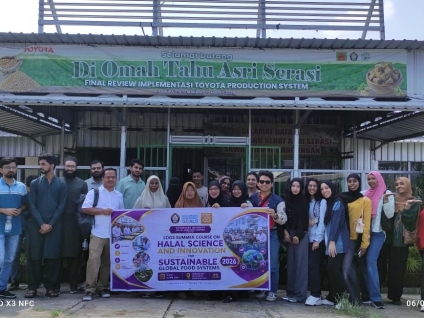
Visit 3 – Tahu Sihat Serasi


Visit 4 – Kodaro Bakery


Visit 5 – Lumpia Mataram KP Baris


Day 4 (4th June)
Group Presentation and Award Ceremony


Day 5  (5th June)  
Networking and departure.


A. CONCLUSION AND APPRECIATION


This program contributes quite abundant knowledge to participants with different cultures and backgrounds, but sharing the same belief in HALALAN/TOYYIBAN. Hopefully, the same concept of the program will continue to be organized in the future.


Congratulations to Halal Research Institute of UNDIP, especially Prof Dr Aries Susanty and its committee members, for organizing this event. Thank you to the Faculty of Industrial Management, Universiti Malaysia Pahang Al-Sultan Abdullah, for allowing me to attend this mobility program.


Reported by:
Suhaimi bin Mat Hussain (KBB23002)
Faculty of Industrial Management
Universiti Malaysia Pahang Al-Sultan Abdullah.


My International Mobility Experience at UNDIP 🇮🇩

My International Mobility Experience at UNDIP 🇮🇩

SDG Summer Course on Halal Science and Innovation

for Sustainable Global Food Systems

at Universitas Diponegoro (UNDIP), Semarang

18th May, 20th –21st May, 1st – 5th June 2026


Indonesia is among the majority-Muslim countries, and its citizens form the largest Muslim communities in Southeast Asia. As Muslims, they are required to consume HALALAN/TOYYIBAN products, especially foods, because food is a very basic need of human beings. Practicing HALALAN/TOYYIBAN by Islamic regulation maintains their obedience to the directive of the religion.

By definition, HALALAN means the sources are coming from clean sources (especially animal-originated sources), while TOYYIBAN means ensuring that the consumption won’t affect their well-being.

Tourism is a major contribution to Indonesia’s economy. Indonesians promote their local products (called Oleh-Oleh Khas, especially foods) as items for tourist to bring back to their countries. These products retain their uniqueness by their respective region. For example, Bandeng Presto (milkfish cooked in a special method until its bone becomes soft and consumable) is among Oleh-Oleh Khas from Semarang. By applying the HALAL certification, tourists, especially from Muslim countries, will benefit from it.

New halal logo approved by the Government of Indonesia (2023)

Other than food, HALALAN/TOYYIBAN is also required in other fields like pharmaceuticals, cosmetics, and other lifestyles. Thus, ongoing research regarding the process and certification approved/recognized by the government is a continuous effort that should be welcomed.  


Halal Research Institute of Universitas Diponegoro (UNDIP) has organized this Summer Course and invites participants from other universities to join this program to gain knowledge in HALAL processing scientifically. This program is also in line with a few SDGs to ensure sustainability for future generations.

This program comprises online and physical sessions.

My International Mobility Experience at UNDIP 🇮🇩

My International Mobility Experience at UNDIP 🇮🇩

SDG Summer Course on Halal Science and Innovation

for Sustainable Global Food Systems

at Universitas Diponegoro (UNDIP), Semarang

18th May, 20th –21st May, 1st – 5th June 2026


Indonesia is among the majority-Muslim countries, and its citizens form the largest Muslim communities in Southeast Asia. As Muslims, they are required to consume HALALAN/TOYYIBAN products, especially foods, because food is a very basic need of human beings. Practicing HALALAN/TOYYIBAN by Islamic regulation maintains their obedience to the directive of the religion.

By definition, HALALAN means the sources are coming from clean sources (especially animal-originated sources), while TOYYIBAN means ensuring that the consumption won’t affect their well-being.

Tourism is a major contribution to Indonesia’s economy. Indonesians promote their local products (called Oleh-Oleh Khas, especially foods) as items for tourist to bring back to their countries. These products retain their uniqueness by their respective region. For example, Bandeng Presto (milkfish cooked in a special method until its bone becomes soft and consumable) is among Oleh-Oleh Khas from Semarang. By applying the HALAL certification, tourists, especially from Muslim countries, will benefit from it.

New halal logo approved by the Government of Indonesia (2023)

Other than food, HALALAN/TOYYIBAN is also required in other fields like pharmaceuticals, cosmetics, and other lifestyles. Thus, ongoing research regarding the process and certification approved/recognized by the government is a continuous effort that should be welcomed.  


Halal Research Institute of Universitas Diponegoro (UNDIP) has organized this Summer Course and invites participants from other universities to join this program to gain knowledge in HALAL processing scientifically. This program is also in line with a few SDGs to ensure sustainability for future generations.

This program comprises online and physical sessions.

For online sessions, it consists of lecture programs which have been divided into 3 days of lectures:

Day

Presenter

Topics/Key Points

1 (18th May)

Prof Diana Nur Afifah

The Role Of Biotechnology

In Halal Food Production

Prof Irwandi Jaswir

Global Halal Industry: Opportunities and Challenges

Different Islamic countries have different methods of Halal Certification, which affects the import/export procedure.

2 (20th May)

Prof Widayat

Critical and Non-critical Points of Materials Used for the Halal Product Process

Prof Satomi Ohgata

Halal Practices in Japan: Between Strict Halal Standards and Lived Practice in Minority Settings

3 (21st May)

Prof M Ajmal Shah

Green Extraction Technologies in Halal Phytochemicals (SDG3, SDG9, SDG12, SDG17)


All participants were also required to submit their assignments on selected topics to ensure a deep understanding of the lectures.

For physical sessions, it comprises visits to selected food manufacturing premises and is explained chronologically as follows:

Day 1 (1st June) – Arrival Day. As I travelled from Malaysia to attend this event, I was picked up at Semarang Airport by UNDIP representative (Mr Aldo Siregar and Miss Syaidah Nabilah), treated with Nasi Padang for lunch, and later checked in at Horizon Antawirya Hotel, near UNDIP campus. Participants also arrived from nearby universities like Universitas Negeri Semarang (UNES) and Universitas Negeri Malang (UM) with different nationalities, mostly from Pakistan, Egypt, and India.


Day 2 (2nd June)

Visit 1 – Bandeng Juwana Elrina


Visit 2 – Tahu Bakso Baginda


Day 3 (3rd June)

Visit 3 – Tahu Sihat Serasi


Visit 4 – Kodaro Bakery


Visit 5 – Lumpia Mataram KP Baris


Day 4 (4th June)

Group Presentation and Award Ceremony


Day 5  (5th June) 

Networking and departure.


A.  CONCLUSION AND APPRECIATION


This program contributes quite abundant knowledge to participants with different cultures and backgrounds, but sharing the same belief in HALALAN/TOYYIBAN. Hopefully, the same concept of the program will continue to be organized in the future.


Congratulations to Halal Research Institute of UNDIP, especially Prof Dr Aries Susanty and its committee members, for organizing this event. Thank you to the Faculty of Industrial Management, Universiti Malaysia Pahang Al-Sultan Abdullah, for allowing me to attend this mobility program.


Reported by:

Suhaimi bin Mat Hussain (KBB23002)

Faculty of Industrial Management

Universiti Malaysia Pahang Al-Sultan Abdullah.