Blog

Where Knowledge Meets Leadership.

Q & A with Aida Ismail, Regional Director for Asia, HADID International Services (UAE)

Q & A with Aida Ismail, Regional Director for Asia, HADID International Services (UAE)

From Runway to Boardroom: The Strategic Decision-Making Playbook Behind Aviation’s Wins


Q1: How did the emotional trauma of past tragedies personally shape the mindset of MAS executives during the 2024 and 2026 conflicts?

For MAS executives, the 2014 downing of MH17 was a tragic watershed moment that deeply affected the company's culture. This profound loss means that today, boardroom decisions are not just about algorithms; they are driven by an uncompromising, permanent "zero-risk" mindset. When new drones or missiles launch, leaders do not hesitate—they immediately execute detours to protect lives, prioritizing absolute safety to prevent history from repeating itself.

Q2: If you were a stranded passenger in the Middle East during the Q1 2026 airspace closures, how would MAS's strategic decisions have personally affected you?

You would have likely felt a massive sense of relief. While Gulf carriers—which normally handle 40% of all Asia-Europe connecting traffic—were forced into massive network cancellations, leaving passengers stranded in paralyzed mega-hubs, MAS came to the rescue. By mobilizing three extra A350-900 relief flights, MAS provided over 900 immediate seats to safely bring stranded travelers home through Kuala Lumpur.

Q3: What was the most difficult ‘courageous’ decision an airline CEO had to make in April 2024 regarding KUL-London flights?

The most difficult decision was intentionally losing money to guarantee safety. Because the rerouted flights took over 13.5 hours, the planes needed maximum fuel, which meant there was no weight allowance left for lucrative cargo. The CEO and boardroom had to make the tough call to completely freeze all cargo freight for two weeks. It takes strong leadership to accept a massive short-term revenue loss as the ultimate defense of passenger lives and brand equity.

Q4: Why would the C-suite executives of an airline feel intense ‘financial pain’ and stress even when their planes were successfully flying around the conflict zones?

The stress comes from watching their profit margins completely vaporize overnight. The sudden spike in jet fuel costs consumed a crushing 35% of total airline overheads. Imagine the immense pressure of running a massive, highly complex airline operation, only to see global average earnings shrink to a razor-thin profit margin of just 2%—or about $4.50 per passenger ticket. This leaves executives with absolutely zero financial room for error.

Q5: As future business leaders, what personal mindset shift should MBA students learn from MAS's belief that ‘Geography is destiny’?

Students should learn to view their perceived limitations as strategic advantages. Traditional Gulf mega-hubs are usually the dominant players, but during geopolitical crises, their location becomes a liability. A strategic leader shifts their mindset to capitalize on this by confidently positioning their own safe, unaffected geography—like Kuala Lumpur—as the ultimate resilient fallback corridor, turning global chaos into a market gain

More insights can be watched on our YouTube: https://www.youtube.com/watch?v=t_iQC_Xk3-k

Q & A with Log. Ts. Dr. Adam Mohd Saifudin, Deputy President of The Society of Logisticians

Q & A with Log. Ts. Dr. Adam Mohd Saifudin, Deputy President of The Society of Logisticians

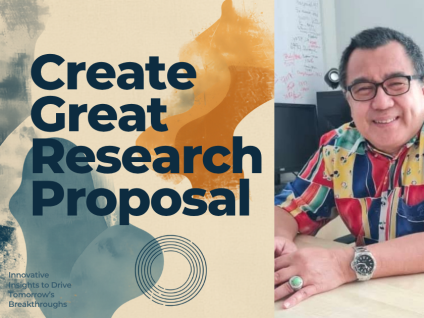
Tips on How to Make a Great Research Proposal: Industry Nexus Research

Q1: What is the fundamental purpose of conducting research, according to Dr. Adam? 

While many academics joke that research is simply for meeting university KPIs, I would like to emphasize that the true, positive motivations for research are to contribute to new knowledge and to support nation-building and industry growth. It is a systematic effort to solve problems and evaluate facts that ultimately benefit society, the industry, and the country.

Q2: From an examiner's perspective, what is the most critical part of a research proposal or thesis that determines its success?

To me, Chapter One is the most crucial element because it dictates the entire story of the thesis. Examiners look closely at the "problem statement" or research gap. If the research problem does not correctly align with the research questions and objectives in Chapter One, the literature review and subsequent data findings will lack a proper foundation, often leading to major corrections or failure.

Q3: What specific financial strategy should researchers use when drafting their proposal budgets?

I would suggest that researchers should request a realistic, prudent budget, but they must always include a 10% to 20% contingency budget. This extra buffer is vital to cover unexpected expenditures during the project or to compensate if the funder (like the government or an industry partner) approves a lower grant amount than initially requested.

Q4: How can university researchers successfully secure research grants from private industries?

To secure industry funds, we as researchers must convince the company by proving they can deliver tangible results that solve real, immediate operational problems (such as warehousing or distribution inefficiencies). Additionally, researchers can incentivize companies by informing them that financial contributions toward university research can be deducted from the company's income tax.

Q5: What are a major pitfall students and researchers face when working on group reports, and how can it be avoided?

A common and severe mistake is "compiling without reading." Group members often divide the sections, write them individually, and staple them together at the last minute without reviewing the overall flow. To avoid a disjointed report, groups must meet frequently, discuss the direction, and ensure that every single member reads and verifies the finalized compiled document.

Q6: What is the Society of Logisticians Malaysia (LogM) and what unique privilege does it grant its professional members?

LogM is a professional NGO designed to foster networking, knowledge sharing, and professional development among logisticians in Malaysia. One of its most unique privileges is that legally qualified members (Fellow LogM and Member LogM) are officially awarded the right to use the prefix "Log." before their names (e.g., Log. Dr. Adam), signaling their professional expertise.

Q7: How does Dr. Adam contrast the mindsets of industry practitioners versus academic staff, and why is collaboration necessary?

I am an industry practitioner, and we have vast daily operational experience but often lack large-scale theoretical planning or visionary frameworks. Conversely, academic university staff possess massive theoretical knowledge ("cognitive value") but usually lack practical, on-the-ground industry experience. Industry-university collaboration is crucial because it merges these two worlds, bridging the knowledge gap to produce practical, high-impact solutions.

View the full video at : https://www.youtube.com/watch?v=yD26UBvgrvQ


 Q & A with Dr Madiha Fuad, Founder and CEO of PlusVibes Group

Q & A with Dr Madiha Fuad, Founder and CEO of PlusVibes Group

By: Associate Professor Dr Puteri Fadzline binti Muhamad Tamyez, Dr Fatimah binti Mahmud, Dr Zetty Ain binti Kamaruzzaman, Associate Professor Dr Lee Khai Loon

Q1: Your early life involved extensive global travel due to your father’s diplomatic career. How did this diverse background influence your academic pursuits, particularly your decision to return to Malaysia for journalism?

I spent my early years shuttling between cosmopolitan cities like Paris, Tokyo, London, and Jeddah, and I completed my education, including the International Baccalaureate, at the International School of Paris. I learned the languages and cultures of every place I lived, including French and Japanese. When I returned to my home country, Malaysia, in 2009, I joined UiTM Shah Alam primarily to improve my Malay language writing skills. I earned a bachelor's degree in journalism to enhance my knowledge of the media and improve my writing fluency. It was during this time that I discovered my passion for education and management, eventually leading me to graduate with an MBA from Taylor’s University in 2017 with first-class honours, and now I am pursuing a PhD.


Q2: You began your professional life in business journalism at The Edge. What drove your significant career transition from narrating the business world to actively participating in it as an entrepreneur?

Starting in 2012 as a reporter at The Edge, I had the unique opportunity to meet big CEOs, investors, and other stakeholders. The more I got involved with these top-suite executives, witnessing their struggles and successes, the more I understood that I wanted not to narrate other people’s lives but to write my own. Spending time with visionary leaders and watching their strategic thinking was a defining moment that inspired me to become an entrepreneur. My transition, which began in 2015, was driven by a strong passion for the markets, for people, and for social change.


Q3: The establishment of PlusVibes was deeply personal, following a tragic accident in 2019. Can you describe how that unfortunate event influenced your personal mental shift and led directly to the founding of the organization?

In 2019, I was left partially paralyzed due to damage to my long thoracic nerve, resulting in chronic pain, physical weakness, and acute anxiety and panic attacks. This time was doubly difficult as it coincided with the chaos of the COVID-19 pandemic. Lying in the hospital, I realized the enormous obstacles people face in accessing affordable mental health services. I decided I had to transform my "victim’s mindset" into a growth mindset through therapy, reading self-help books, and self-awareness. Once I gained knowledge about mental health and support systems, my purpose became clear: to share this knowledge to help others who were struggling. I truly healed when I accepted that I had to go through that tough chapter to prepare for the next one—developing PlusVibes.


Q4: What is PlusVibes? 

PlusVibes is a pioneering digital platform and mobile application in Malaysia designed to provide comprehensive mental health support. Operating under the core slogan, "Prevention is better than cure," the platform aims to destigmatize mental health and provide accessible, user-friendly services for anyone in need.


Q5: What are the key features of the PlusVibes app?

The app offers a holistic suite of mental health services, including:

Anonymous Chat: Users can log in with an email and within two minutes be connected to a human "Viber" (counselor) for a 45-minute confidential chat session.

Specialist Booking: A "swipe" feature (inspired by dating apps) allows users to browse portfolios and book sessions with psychologists, nutritionists, and coaches for as low as RM 50.

AI Buddies: AI companions with different personas, such as "AI Maddie," "AI Dina" (who speaks with Gen Z slang), an AI for working mothers, and an AI work performance coach.

Assessments & Trackers: Integrated tools like a mood tracker, sleep tracker, and "Wheel of Life" modules that help users identify the root causes of their stress.

Curated Content: Highly viewed YouTube relaxation and anxiety-relief videos are curated within the app for easy access.


Q6: PlusVibes began as a non-profit organization. What is the fundamental mission that guides your organization, and how do you ensure that support remains accessible?

Our mission is clear: "to inspire people to overcome life challenges, improve systems, and, most importantly, empower people to believe that they can make a difference in the world". We were founded on the strong belief that mental health is just as vital as physical health and must be prioritized. A core value of PlusVibes is to offer free therapy for those who would benefit from it, particularly those from underprivileged backgrounds who cannot afford counselling. We provide a comprehensive digital solution and are the pioneer in Malaysia for a free mobile app that offers anonymous mental health assistance, including motivational content and relaxation activities, based on our slogan: "Prevention is better than cure".


Q7: PlusVibes began as a Non-Profit Organization (NPO) focused on free services. How did the organization transition into the PlusVibes Group to become a professional, multifaceted organization, and what is its current reach within Malaysia?

As the demand for mental health services grew, our team realized that we could not be restricted within the confinements of an NPO. Scaling up required planning, collaboration, and foundational support, leading to the establishment of the PlusVibes Group. As a professional-oriented organization, we now provide not only therapy and counselling services but also various new and creative wellness programs that focus on enhancing the emotional health of employees, students, and community members of different organizations. Our approach is multifaceted: we focus on Awareness (encouraging the importance of healthy mental well-being), Promote (providing a non-intrusive safe space), and Motivate (training individuals to self-motivate through motivational content and relaxation activities). Currently, our services cover more than 20,000 lives. 


Q8: What is Dr. Madiha's biggest piece of advice for innovation? 

My core philosophy is: do not wait for perfection. If you wait for an idea to be flawless, you will never launch it. Take action, test on a small scale, and constantly iterate based on user feedback. I would heavily emphasize that an innovative idea must be a "systematic solution," meaning it needs proper organizational structure to be scalable and sustainable.


Q9: How does Dr. Madiha personally manage the stress of being a CEO? 

I utilize several daily lifestyle habits:

Sweating it out: I frequently plays racket sports (like tennis, pickleball, or badminton) to clear toxins and engage physically, mentally, and socially.

Journaling: I also love to sit alone at coffee shops to write my thoughts down, preventing mental overload.

Dietary choices: I avoid coffee entirely, as anxiety chemically alters the body to be more acidic, and caffeine can trigger adrenaline rushes or gastric issues. Instead, I drink hot honey lemon tea, or matcha, and strictly avoid junk food like instant noodles.

Listening to music: I listen to instrumental music tuned to specific frequencies that help calm the mind.


This Q & A session was conducted during the industrial talk by Dr Madiha.

Want to explore the full story of PlusVibes?

Get PlusVibe's  case study now from UMPSA Publisher Bookstore or conveniently on Shopee:  https://my.shp.ee/uWRDUxK

 

Resilience, discipline, and perseverance in GET-BS

Resilience, discipline, and perseverance in GET-BS

By: Nurul Syakirah binti Jamaluddin

MBA Alumna 2025 | Lecturer at Kolej Poly-Tech Mara, Pahang

Pursuing the Master of Business Administration at Graduate Engineering and Technological Business School, FIM, UMPSA has been an incredibly transformative and enriching experience that has not only strengthened my academic knowledge and professional skills but also profoundly shaped my personal growth in ways I had never imagined, and from the very beginning. I knew that balancing the rigorous demands of the program with work commitments, personal responsibilities, and other aspects of life would be challenging, and indeed, there were moments of doubt, fatigue, and sacrifice, yet each obstacle and difficulty presented itself as an opportunity to develop resilience, discipline, and perseverance. It teaches me that true success is not achieved through comfort or ease but through determination, focus, and the willingness to push beyond limits. 

One of the most rewarding aspects of this journey has been the remarkably supportive environment fostered by UMPSA, where lecturers provide unwavering guidance, encouragement and classmates from diverse professional and cultural backgrounds contribute to a collaborative and inspiring atmosphere, enriching my learning experience and broadening my perspectives while also fostering friendships and networks that I know will last well beyond the classroom, and throughout the program. 

I discovered newfound confidence in my ability to lead, to manage challenges, to make decisions under pressure, and to remain committed even in difficult circumstances, gaining skills, knowledge, and a mindset that will undoubtedly serve as valuable tools as I advance in my career and contribute meaningfully to my organization and community, and looking back on this journey. 

I am deeply grateful to GET-BS for providing such a nurturing, empowering, and transformative platform, which has not only allowed me to achieve academic success but has also prepared me to embrace new opportunities, responsibilities, and challenges. For anyone aspiring to develop professionally, personally, and intellectually, I wholeheartedly recommend GET-BS as the ideal place to embark on such a life-changing and growth-filled journey. 


Finance: The Language of Business and the Future of Our School

Finance: The Language of Business and the Future of Our School

By: Prof Dr Irene Ting Wei Kiong

Director, Ranking & Data Division UMPSA | Academic Associate of GET-BS | Professor, the Faculty of Industrial Management

As someone from the finance area, I often describe finance as the language of business. It is the medium through which ideas are translated into action, opportunities into enterprises, and strategies into results. Whether you are an aspiring entrepreneur seeking to launch your first venture, a corporate manager steering an organization, or a policymaker designing economic reforms, finance equips you with the tools to make informed decisions, manage resources wisely, and create value sustainably.

In today’s fast-changing environment, finance is no longer confined to balance sheets and profit-and-loss statements. The landscape is being reshaped by three powerful forces: technology, sustainability, and global interconnectedness. Technology is revolutionizing finance through fintech innovations such as digital payments, blockchain, and artificial intelligence. These tools make financial services faster, more accessible, and more transparent than ever before.

Sustainability has redefined the way we measure business success. Investors and companies now recognize that environmental, social, and governance factors are not optional—they are central to long-term value creation and risk management. Global interconnectedness means that financial decisions are rarely isolated. Capital flows, supply chains, and market shocks cross borders instantly, requiring professionals to think beyond local contexts and adopt a global perspective.

For graduates of Technical and Vocational Education and Training (TVET) programs, finance becomes an especially powerful enabler. Technical expertise is crucial, but the industry needs professionals who can pair those skills with financial literacy—evaluating project feasibility, managing budgets, and ensuring sustainability of operations. A technically sound innovation will only succeed if it is financially viable. The future of business education lies in interdisciplinary learning, where finance works hand in hand with technology, sustainability, and entrepreneurship. Together, these areas empower students not only to adapt to change but also to lead it.

Let’s continue to learn together, grow together, and shape the future of business education—where finance remains the language of business, and our school becomes the place where tomorrow’s leaders find their voice.


An Interview with Ustaz Jamaluddin Abdul Jabbar and Ustazah Umee Ruziani Ab Ghani, Founders of Maahad Tahfiz Al-Baraqah Integrasi Quran (MABIQ)

An Interview with Ustaz Jamaluddin Abdul Jabbar and Ustazah Umee Ruziani Ab Ghani, Founders of Maahad Tahfiz Al-Baraqah Integrasi Quran (MABIQ)

By: Professor Dr Yudi Fernando, Dr Azian Ibrahim, Dr Noorizan Mat Saad, Dr Syed Radzi Rahamdulla, Dr Mohd Ghazali Maarof

Ustaz Jamaluddin bin Abdul Jabbar and his wife, Ustazah Umee Ruziani binti Ab Ghani are the founders of Maahad Tahfiz Al-Baraqah Integrasi Quran (MABIQ), a distinctive social enterprise established in 2007 that seamlessly integrates education and business to sustain its operations. Ustazah Umi, who graduated in Actuarial Science and later completed studies in TESL (Teaching English as a Second Language), married Ustaz Jamal, who worked as an officer at Yayasan Pahang. The inspiration for the Maahad, which formally started with just three orphans, came in 2005 after Ustazah Umee finished her TESL studies, aiming to provide free Islamic studies focusing on Quranic studies, Fiqh, and secular education to orphans and underprivileged families. Ustaz Jamal, finding relief in establishing the Maahad despite his challenges at Yayasan Pahang, used his salary to support the operation initially, including teacher salaries and student meals. Due to significant financial constraints arising from the increasing number of students, the couple leveraged their family backgrounds in small businesses to open a small restaurant beside their land in 2010, where all profits are directed toward the Maahad to fund its operational needs. Ustazah Umee and Ustaz Jamal's perseverance allowed MABIQ to persist through early challenges, including financial losses and a lack of managerial expertise, eventually expanding the restaurant, which became well-known across Malaysia for its authentic traditional Pahang cuisine, such as ikan patin masak tempoyak and daging salai.


Q1: You both have very diverse academic and professional backgrounds—Ustazah Umee in Actuarial Science and TESL, and Ustaz Jamal previously working at Yayasan Pahang. What was the core inspiration behind establishing MABIQ, and how did your Maahad Tahfiz begin?

The inspiration to establish the Maahad Tahfiz came in 2005, shortly after Ustazah Umee completed her studies in TESL (Teaching English as a Second Language). Initially, we had the noble aim of providing free Islamic studies to orphans and underprivileged families, focusing on Quranic studies, Fiqh, and secular education. We started formally in 2007 with just three orphans, but that number quickly grew. For Ustaz Jamal, establishing the Maahad offered relief from the challenges he faced while still working at Yayasan Pahang. Furthermore, his experience studying in Indonesia was influential, as many graduates there opened their own schools or businesses, inspiring him to combine religious and entrepreneurial values.


Q2: MABIQ operates a dual-function model, combining an educational institution with a commercial restaurant. Why did you decide to diversify into the food business, and how does the restaurant ensure the Maahad's financial survival?

Sustaining the religious school solely through our personal funds and donations became challenging, especially as the number of students increased. Financial constraints were significant. This led to the idea of opening a restaurant to sustain the Maahad financially. We started a small, modest restaurant (about 20x10 feet) beside our land in 2010. The key principle is that all profits from the restaurant are directed toward the Maahad to fund its operational needs, including teacher salaries and student meals. This self-sustaining model enables MABIQ to provide free Quranic and secular education to orphans and underprivileged students while ensuring financial stability.


Q3: Running a community developer model that spans education, da'wah, and commercial food supply chain management must present unique difficulties. What were some of the most challenging aspects of the business side of MABIQ during its early years?

We did have an entrepreneurial background—Ustaz Jamal’s parents owned a coffee shop, and Ustazah Umee’s family also ran small businesses—which helped us manage the restaurant. However, the struggles extended beyond just da'wah. The most challenging part was addressing business problems we had not mastered before. This required considerable effort, knowledge, and experience, especially in managing the food supply chain. This includes ensuring the freshness of food ingredients, managing operational costs, and maintaining supplier support. Additionally, we faced initial uncertainties, financial losses, and even unscrupulous business dealings due to a lack of managerial expertise.


Q4: Your restaurant has built a strong reputation across Malaysia. What is MABIQ’s culinary specialty, and what steps do you take to ensure the quality and authenticity of these dishes?

We specialize in traditional Pahang cuisine. We are well-known for authentic traditional dishes, particularly ikan patin masak tempoyak (silver catfish in fermented durian paste) and daging salai (smoked beef). To ensure quality, our vendor management strategy includes seeking suppliers who adhere to strict standards, such as sourcing fresh ikan patin directly from river cage farms, which produce tastier fish. We also require fresh, newly harvested asam keping (dried sour fruit) for the ikan patin dish. Furthermore, because tempoyak (fermented durian paste) is a vital ingredient, we must source high-quality durian, typically from Johor and Pahang, during its two seasons a year. We also mandate that all suppliers and ingredients possess a halal certificate to foster trust and confidence among our patrons.


Q5: MABIQ operates on a debt-free model, relying on reinvesting restaurant profits. How does this fiscal constraint impact your supply chain logistics, and what are your strategic plans to overcome these limitations?

Our debt-free model, while fiscally conservative, leads to limited capital. This financial constraint limits our ability to invest in supply chain improvements, such as purchasing dedicated vehicles for halal logistics. Currently, we are forced to share transport vehicles between the Maahad (transporting students) and the restaurant (transporting fresh fish), which poses hygiene risks and affects the freshness of perishable items due to potential cross-contamination. To overcome this, we are slowly implementing competitive strategies, such as applying for grants on Islamic Microfinance. Our strategic plans include establishing a centralized kitchen to ensure consistent food quality and simpler logistics, and acquiring dedicated halal-certified transport vehicles to eliminate contamination risks and enhance food safety. We are also seeking capital investment from governments or Halal business grants to prioritize these logistics enhancements.

* Want to explore the full story of MABIQ?

Get your copy now from UMPSA Publisher Bookstore or conveniently on Shopee:  https://my.shp.ee/uWRDUxK