
Blog

Where Knowledge Meets Leadership.

Business Analytics: Turning Data into Strategic Advantage

Business Analytics: Turning Data into Strategic Advantage

By: Associate Professor Dr Cheng Jack Kie

Academic Associate in Graduate Engineering & Technological Business School | Associate Professor of the Faculty of Industrial Management UMPSA

In today’s digital economy, data is often described as the “new oil.” Organizations across industries are generating unprecedented amounts of data through customer interactions, transactions, digital platforms, and sensors embedded in everyday devices. Yet, just as crude oil requires refining before it becomes valuable, data must be collected, processed, and analysed before it can drive business impact. This is where Business Analytics steps in.

Business Analytics is not only about number-crunching or producing dashboards. At its core, it is the practice of transforming raw data into actionable insights that guide better decision-making. It draws upon disciplines such as statistics, data mining, predictive modelling, machine learning, and operations research. As businesses face mounting uncertainty, increased competition, and complex global challenges, Business Analytics has become a strategic differentiator.

Why Business Analytics Matters

Modern organizations operate in highly competitive, data-rich environments. Business Analytics enables them to:

  • Enhance Decision Quality: Data-driven insights reduce reliance on gut instinct and provide evidence to support strategic choices.

  • Improve Efficiency: By analysing operations, organizations can identify bottlenecks, streamline workflows, and reduce costs.

  • Personalize Customer Experiences: Analytics helps businesses understand customer preferences and deliver more targeted products and services.

  • Manage Risks: Predictive models allow firms to anticipate risks such as fraud, supply chain disruptions, or financial downturns before they escalate.

  • Drive Innovation: By uncovering unmet needs and hidden opportunities, analytics can spark new products, services, and business models.

Simply put, Business Analytics turns uncertainty into clarity and data into a competitive advantage.

Business Analytics in Practice

The power of Business Analytics is best illustrated through practical examples:

  • Supply Chain Optimization: Companies use advanced analytics to forecast demand, optimize inventory placement, and reduce delivery times.

  • Marketing Analytics: Digital advertisers analyse clickstream and engagement data to optimize campaigns in real time, ensuring higher return on investment.

  • Human Resources Analytics: Organizations use people analytics to predict employee turnover, enhance recruitment, and improve workforce planning.

These examples show how Business Analytics is no longer a back-office function but an integral part of strategy and operations.

Skills for the Future

As organizations continue to invest in analytics, demand for professionals with the right mix of technical and business skills is growing. A successful business analyst today requires:

  • Technical Skills: Proficiency in tools like Python, R, SQL, Tableau, or Power BI.

  • Statistical Knowledge: Understanding probability, regression, forecasting, and experimental design.

  • Business Acumen: Ability to link data insights with business strategies and objectives.

  • Communication Skills: Translating complex analytical findings into clear, persuasive recommendations for decision-makers.

  • Ethical Awareness: Recognizing issues of data privacy, bias, and fairness in analytics applications.

Business schools play a critical role in equipping future leaders with these skills, blending technical expertise with managerial insight.

The GET-BS Advantage: Learning Business Analytics in the MBA

At GET-BS, we recognize that Business Analytics is more than just a supporting function; it is central to leadership in the 21st century. That is why the MBA program at GET-BS includes a dedicated Business Analytics course. This course is designed to prepare students for data-driven decision-making in a rapidly evolving business landscape.

MBA candidates are equipped with the tools to:

  • Analyse large, complex datasets and extract meaningful insights.

  • Apply predictive and prescriptive models to solve real-world business problems.

  • Use industry-standard platforms like Excel and Power BI for hands-on analytics practice.

  • Tackle case studies drawn from finance, healthcare, technology, and supply chains.

What makes GET-BS unique is its integration of engineering, technology, and management perspectives. Our MBA graduates don’t just learn how to interpret data. They learn how to connect insights with innovation, strategy, and execution. By bridging technical fluency with leadership skills, GET-BS ensures its graduates are prepared to lead in industries undergoing digital transformation.

Conclusion

Business Analytics is no longer optional; it is essential. As industries are disrupted by digital transformation, the ability to convert data into insight and insight into action defines competitive advantage. Business Analytics has become the compass guiding organizations through complexity and uncertainty. At GET-BS, we believe tomorrow’s leaders must be fluent in both business and technology. For students eager to thrive in the age of data, this is more than just a course. It is a launchpad for future success.

If you are ready to transform your career, make smarter decisions, and lead with confidence in a data-driven world, GET-BS MBA is your next step.



What Do We Professionals Really Do? We Solve Problems.

What Do We Professionals Really Do? We Solve Problems.

By: Ts Dr Muhammad Fakhrul Yusuf

Academic Associate of GET-BS | Nexus of Strategic Innovation in Sustainability and Digital Transformation (XSIST) (Learn | Lead | Lecture) | Senior Lecturer of the Faculty of Industrial Management, UMPSA

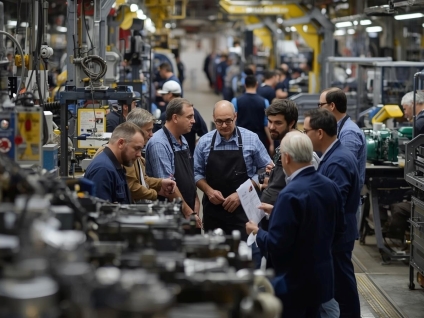
I remember my senior once asking me during my early years as a young engineer: “What do engineers really do?” The answer, at its core, is simple yet profound: we solve problems. Any problems. Problems of today, problems of tomorrow, tangible issues we can see, latent challenges hidden beneath the surface, and even potential issues that may not yet exist but will eventually emerge.

This perspective is not limited to engineering; it applies to all professions.

If you’re an HR executive, you solve problems about people and performance.
If you’re a Lean Executive, you solve problems about efficiency.

Likewise, when you graduate from a university program, your professional path might differ depending on the discipline you chose. But the common thread is always the responsibility to address and improve situations.

If you are an MBA graduate from the GET-BS, UMPSA, your role should not be confined to doing what other MBA graduates do. You are expected to go further, to deliver something extra, particularly when technical evaluations related to business-critical analyses are required. This “something extra” is what sets you apart and prepares you to make a distinctive impact. The essence remains the same; your role is to identify challenges within your domain and resolve them in ways that add value to the organisation.

Source: https://cdn.pixabay.com/photo/2017/04/06/15/02/hand-2208491_1280.jpg

That being said, the nature of problem-solving evolves as one progresses in a career. When I advanced up the corporate ladder, I realized that being an engineer still meant solving problems. However, the key difference was not in the act of solving itself, but in prioritising which problems to solve first. Every solution consumes costs, time, and energy, resources that are often limited. Learning how to prioritise, not only from a technical perspective but from the broader lens of business strategy, became critical to my growth.

This reality extends to every career path. Making decisions solely based on your professional expertise is one thing; it ensures accuracy and depth. But considering the whole organisational picture, understanding trade-offs, and aligning solutions with business objectives is what defines long-term success. It is not just about being an expert in your field; it is about being a problem-solver who understands the context, the priorities, and the bigger picture.

At the end of the day, it all boils down to your ability to solve problems and your wisdom to decide which problems truly matter.


Leadership for a sustainable future: Why trustworthiness and competency matter in achieving the SDGs

Leadership for a sustainable future: Why trustworthiness and competency matter in achieving the SDGs

By: Dr Nur Sofia Nabila binti Alimin

Academic Associate of Graduate Engineering & Technological Business School |Senior Lecturer in the Faculty of Industrial Management, UMPSA

A new era of leadership in Engineering and Business

The 21st century presents us with both incredible opportunities and immense challenges, ranging from climate change and technological disruption to resource scarcity and widening inequality. Against this backdrop, the world has embraced the United Nations Sustainable Development Goals (SDGs), 17 ambitious goals that provide a shared blueprint for peace, prosperity, and sustainability by 2030.

But progress toward these goals is not just driven by policy or innovation; it is driven by leadership. At the Graduate Engineering and Technological Business School (GET-BS), we strongly believe that the leaders of today and tomorrow must move beyond conventional leadership models. It is time for a Value-Based Leadership approach—one grounded in the core values of trustworthiness and competency.

Source: https://assets-global.website-files.com/61bba0d8d5db9a402afc2065/63e6511a4dc99bfc8a446fbf_new%20leaders%20education%20leadership%20development%20leader%20leading%20others%20to%20the%20top.jpg

Trustworthiness: The foundation of ethical leadership

Trust is not given—it is earned. And in leadership, it is everything.

A trustworthy leader models honesty, reliability, and fairness. In the context of SDG-focused initiatives, trust ensures that stakeholders from governments and corporations to communities and consumers believe in the vision and direction of the leadership.

At GET-BS, we teach future leaders that trustworthiness means:

  • Leading with transparency and clear communication

  • Upholding ethical standards, even under pressure

  • Building inclusive teams where everyone feels respected and heard

  • Being accountable to both people and the planet

When people trust their leaders, they are more likely to commit to shared goals, adopt sustainable practices, and drive long-term change.

Competency: Leading with expertise and vision

While trust is the foundation, competency is the engine of effective leadership.

Competency means more than mastering technical skills; it involves critical thinking, adaptability, and strategic foresight. In engineering and technology-driven industries, competent leaders are those who:

  • Understand and apply sustainable technologies

  • Integrate innovation with social responsibility

  • Use data and systems thinking to anticipate long-term impacts

  • Make decisions that balance business success with environmental and societal well-being

In the fast-evolving world of digital transformation, climate innovation, and Industry 4.0, competency is what enables leaders to bridge vision and execution.

Source: https://i.pinimg.com/736x/4f/b0/50/4fb0504f8640d126b725f2e3cc299804.jpg

Value-Based Leadership: The perfect balance between trust and skill

What happens when you combine trustworthiness and competency?

You get a leader who not only knows what to do but also inspires others to do it. You get someone who can navigate complexity with integrity. You get someone who leads with purpose and performs with excellence.

This is what we mean by Value-Based Leadership at GET-BS.

It’s not just a leadership style—it’s a leadership standard we uphold across our programs, classrooms, and industry collaborations. It’s how we prepare future leaders to address global challenges with both courage and competence.

Message to Our Future Leaders

To our students, graduates, and partners:

You are the engineers, technologists, and business leaders who will shape the future of our world. As you step into leadership roles, whether in sustainability, innovation, digitalization, or entrepreneurship, remember:

Are you acting with integrity when no one is watching?
Are your decisions backed by knowledge, skill, and foresight?
Are your values aligned with the world you want to build?

Leadership is not about titles. It’s about values in action.
Lead with trustworthiness. Lead with competency.
Lead with purpose for people. 


My Master of Project Management Thesis Project in GET-BS

My Master of Project Management Thesis Project in GET-BS

By: Shavinash Suresh

MPM Alumnus 2025 | Project Engineer, Newwin Engineering 

The Graduate Engineering and Technological Business School (GET-BS) has been instrumental in shaping my thesis on Risk Management using Monte Carlo Simulation and DEMATEL Method for Turnaround Projects in the Petrochemical Industry. This program's unique integration of engineering principles from my undergraduate degree with the project management skills acquired during my master's studies provided the perfect foundation for this complex topic. My bachelor's degree in engineering gave me a deep understanding of the technical intricacies of petrochemical plant operations and the inherent risks associated with turnaround projects. I learned about the critical equipment, the complex processes, and the potential for mechanical failure or operational mishaps.

This foundational knowledge was crucial for identifying and quantifying the specific risks that I would later analyze in my thesis. The project management modules from my master's program built upon this technical knowledge, equipping me with the tools to effectively manage a project from conception to completion. I learned about risk identification, qualitative and quantitative risk analysis, and response planning. This is where the synergy of the GET-BS became most apparent. I was able to apply the theoretical frameworks of project management to the specific engineering context of petrochemical turnarounds. The thesis itself is a direct result of this integrated learning.

The Monte Carlo simulation, a quantitative risk analysis technique, allowed me to model the probabilistic outcomes of various risks, such as equipment failure or labor shortages, on the project's schedule and budget. The DEMATEL method, on the other hand, enabled me to analyze the causal relationships between different risk factors, helping to identify the root causes of potential project delays. Without the comprehensive and integrated education provided by the GET-BS program, it would have been impossible to tackle such a specialized and interdisciplinary topic. The program didn't just teach me a set of skills; it taught me how to synthesize knowledge from different fields to solve real-world problems. This experience has not only enriched my academic journey but has also prepared me for a career in a field where technical expertise and project management acumen are equally valued.


GET-BS: A Transformative Journey Begins

GET-BS: A Transformative Journey Begins

By: Dr. Mohamad Reeduan Bin Mustapha

Academic Associate of Graduate Engineering & Technological Business School | Senior Lecturer of Faculty of Industrial Management, UMPSA

At the heart of Universiti Malaysia Pahang Al-Sultan Abdullah (UMPSA), the Graduate Engineering and Technological Business School (GET-BS) under the Faculty of Industrial Management is dedicated to nurturing capable, ethical, and forward-thinking leaders for the industries of tomorrow.

UMPSA is recognised as the leading Technical and Vocational Education and Training (TVET) institution in the Asia Pacific, standing first among public universities and the Malaysian Technical University Network (MTUN). With a strong Graduate Employment Rate (GE) in 2024, UMPSA continues to deliver practice-oriented technologies and build futures for graduates ready to thrive in today’s ever-evolving industries.

At GET-BS, this commitment is brought to life through innovative and industry-relevant postgraduate pathways. GET-BS currently offers two high-quality programmes: the Master of Business Administration (MBA) and the Master of Project Management (MPM). Both programmes are designed to equip working professionals with the leadership, technical, and practical skills needed to excel in competitive and dynamic sectors.

Master of Business Administration (MBA) 

The Master of Business Administration (MBA) at GET-BS prepares graduates to go beyond conventional management roles. The programme combines core business knowledge with engineering insights, governance, ethics, and hands-on problem-solving. Graduates are empowered to manage organisations effectively, lead high-performing teams, and drive sustainable growth across industries.

Meanwhile, the Master of Project Management (MPM) enables professionals to lead complex projects strategically and sustainably from conception to completion. This programme develops critical expertise in balancing risks, resources, and stakeholder needs while delivering outcomes that have a real impact on industries and communities. It is especially valuable for professionals in engineering, construction, manufacturing, IT, and other technology-driven fields.

Both the MBA and MPM at GET-BS stand out for their practice-oriented approach, blending academic excellence with real-world applications. These programmes are designed in close alignment with industry expectations and future trends, ensuring graduates are not only job-ready but also future-ready.

By joining UMPSA’s innovative TVET ecosystem, you gain practical expertise and industry-relevant knowledge that prepares you to tackle real-world challenges with confidence. Explore diverse pathways at UMPSA, where academic rigour meets practical impact — and where your transformative journey truly begins.


Greenwashing vs. Genuine ESG: How to Tell the Difference?

Greenwashing vs. Genuine ESG: How to Tell the Difference?

By: Prof Dr Salina Daud

Academic Associate of Graduate Engineering & Technological Business School | Professor of the Faculty of Industrial Management UMPSA

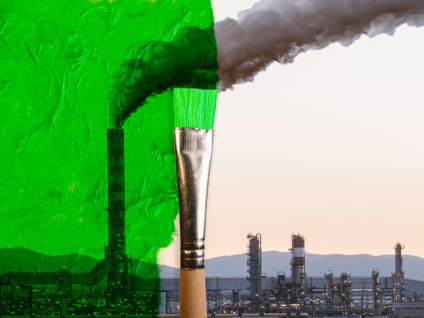
These days, sustainability is everywhere. From shampoo bottles to smartphone ads, from property developers to pet food brands, everyone seems to be claiming they're “eco-friendly,” “net-zero,” or “green.” But how can we tell if these claims are true? This brings us into the often-misleading world of greenwashing. Greenwashing happens when companies exaggerate or even lie about how environmentally or socially responsible they are. It’s like painting a dirty wall green and calling it a forest. This is dangerous, not just for consumers and investors, but also for future business leaders like you. At GET-BS, where we train tomorrow’s leaders in engineering and technology, understanding ESG (Environmental, Social, and Governance) is no longer a bonus. It’s essential. ESG is about how companies interact with the environment, how they treat people, and how they are managed ethically. Done right, it builds trust, attracts investors, and protects our future.